Bahamas history guide: Loyalists arrive 7,300
"The history of the Bahamas is a tapestry woven from migration, colonial shifts, and environmental realities that shaped a unique archipelago."
The Bahamas early settlement history is defined by waves of movement and the distinct environmental constraints of the islands. Understanding these roots helps anyone traveling through the islands grasp why the nation looks and lives the way it does today.
This guide explores colonial migrations, demographic shifts, and the natural factors that influenced settlement patterns.
How did colonial movements shape the population?
A group of settlers arrives at a dusty outpost to begin a new life.
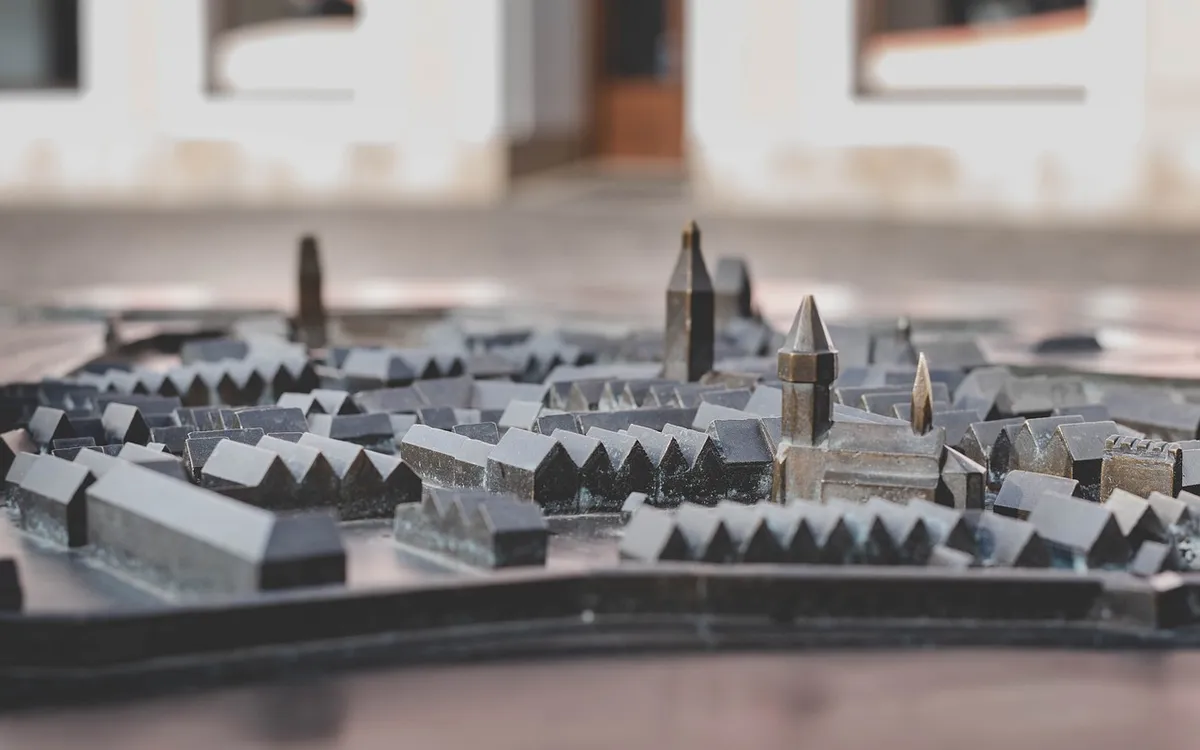
Following US independence, the British resettled some 7,300 Loyalists with their African slaves in the Bahamas, including 2,000 from New York and at least 1,033 Europeans, 2,214 African descendants, and a few Native American Creeks from East Florida.
This influx of people fundamentally altered the social fabric of the islands. These historical movements laid the groundwork for the modern demographic landscape. The Bahamas settlement background is rooted in these complex colonial migrations.
The scale of these movements was significant for the time. The mix of European, African, and Native American individuals created a diverse foundation. These groups brought different skills and traditions to the islands, influencing the culture for generations.
The descendants of these specific groups now constitute 85% of the Bahamian population. This demographic reality remains a central part of the national identity. Understanding these roots of Bahamas history provides a clearer view of the modern society.
Colonial settlement patterns established the foundational demographic structure of the islands, creating diverse communities through migration and trade.
Why is the population distributed unevenly? Bahamas early settlement history
A traveler looks out over a vast expanse of ocean where islands are scattered like jewels. The total land area is 10,010 km2 (3,860 sq mi), consisting of some 700 islands and 2,400 cays in total, with only 30 being inhabited.
The distribution of people across the islands is not uniform. Geography and resources dictate where people can live and thrive. The Bahamas colonial origins were often tied to the accessibility of these various landmasses.
In the southern regions, the density tells a different story. Population density in the southernmost Bahamas remained lower, probably due to the drier climate there. For instance, Great Inagua Island and the Turks and Caicos Islands receive less than 800 mm of rain a year.
Acklins, Crooked Islands, and Mayaguana also experience slightly higher rainfall but remain relatively dry. These environmental factors naturally limited large-scale settlement in the south. The evolution of local life was heavily dictated by these water availability issues.
Population density varies significantly due to the concentration of economic opportunities and infrastructure on larger islands compared to the more remote out islands.
What are the environmental characteristics of the islands?
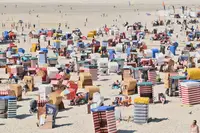
The sun beats down on a bright, white sandy beach under a clear sky. The Bahamas are often sunny and dry for long periods, and average more than 3,000 hours or 340 days of sunlight annually.
The climate is remarkably consistent throughout the year. There is only a 7 °C (13 °F) difference between the warmest month and coolestest month in most of the Bahama islands. This stability has influenced everything from architecture to agriculture.
While the warmth is constant, occasional shifts occur. Every few decades low temperatures can fall below 10 °C (50 °F) for a few hours when a severe cold outbreak comes down from the North American mainland. However, there has never been a frost or freeze recorded in the Bahamian Islands.
This predictable weather pattern makes the islands a unique environment for both residents and visitors. The meaning of local history is often tied to how people adapted to this tropical reality. Understanding local heritage requires acknowledging these climatic constants.
The islands feature low-lying limestone terrain, turquoise waters, and diverse marine ecosystems.
How do the islands compare in size and sea space?
A small boat moves through turquoise water, dwarfed by the vastness of the surrounding sea. The total land area of the islands is 10,010 km2 (3,860 sq mi).
The relationship between land and sea is the most striking feature of the nation. The Royal Bahamas Defence Force describes the Bahamas' territory as encompassing 470,000 km2 (180,000 sq mi) of ocean space.
| Feature | Measurement |
|---|---|
| Total Land Area | 10,010 km2 |
| Total Ocean Space | 470,000 km2 |
The ocean space is significantly larger than the land area. This vast maritime territory defines the nation's strategic and economic importance. The vastness of the ocean space relative to the land is a constant presence in Bahamian life.
While the landmasses are relatively small, the vast maritime territory surrounding the islands represents a much larger portion of the total area.
What are the steps to understanding the historical timeline?
A researcher sits at a desk, flipping through old maps and colonial records. According to the Premier League, in 2013, 'Spurs' became the first Premier League club to play an exhibition match in the Bahamas, facing the Jamaica men's national team.
- Examine the impact of the Loyalist migrations following US independence. 2. Analyze how the 85% descendant population reflects these earlier movements. s3. Compare the land-to-sea ratios to understand the maritime focus of the nation.
A final check involves looking at how environmental limitations, such as the dry climate in the south, shaped settlement. I found that comparing the 10,010 km2 of land to the 470,000 km2 of ocean helps visualize the scale of the territory.
- Identify the era of initial maritime exploration.
- Trace the impact of colonial establishment.
- Examine the transition to modern sovereignty.
The subject here is Bahamas early settlement history.
The same subject is also called Early Bahamas history guide.
Meaning of local history
Related
- Pirate lore modern view: Guide to 1700s maritime past
- Trade guide: Bahamas business success with US 45%
How does the environment influence modern life in the Bahamas?
The consistent solar exposure and predictable temperature ranges define the daily rhythms of the islands. The adaptation to this stable tropical climate has shaped traditional practices across generations.
According to World Bank data, the Bahamas recorded international tourist arrivals of 1,794,500 in 2020.
The enduring influence of the environment is visible in how communities have sustained themselves.
The limited rainfall in the southern regions necessitates specific agricultural practices. Reliance on water management becomes a critical aspect of survival in those areas. This dependence on localized resources reflects the broader environmental constraints of the Bahamas.
The vast ocean surrounding the archipelago provides both sustenance and a boundary. The maritime focus, necessitated by the land-to-sea ratio, remains central to the modern Bahamas. This relationship between land and sea has always been vital to the history of the Bahamas.
The maritime environment dictates much of the local economy, influencing industries such as tourism, fishing, and maritime trade.




Comments 0