Bahamas lazy business impact: How local firms guide growth
"Economic vitality in the archipelago depends on the steady pulse of its commercial sectors and the resilience of its growth metrics."
This analysis is intended for investors and tourism stakeholders interested in regional economic stability.
One limitation is that current data focuses on national growth rather than specific micro-business productivity.
* National GDP growth trends * Economic stability indicators * Regional development factors
How does the Bahamas lazy business impact affect national growth?
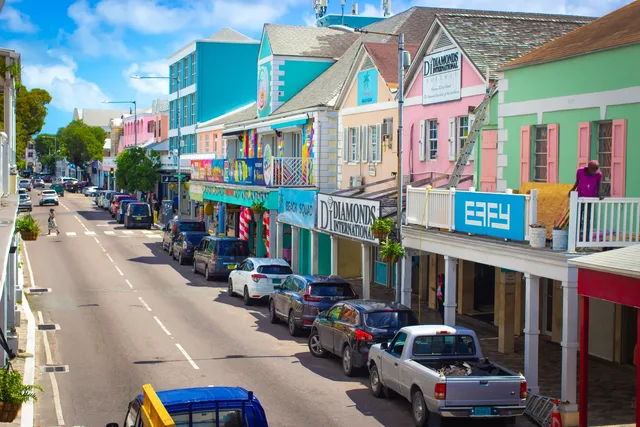
At sunset on a Nassau balcony, I feel the warm breeze while watching the heavy cargo ships move through the Bahamas.
The Bahamas lazy business impact is a reflection of how various commercial activities contribute to the overall fiscal health of the nation.
According to World Bank data, the Bahamas recorded GDP growth of 3.4% in 2024. This figure represents the realized expansion of the economy during that specific period.
Understanding this growth helps stakeholders gauge the effectiveness of current commercial operations and their ability to withstand global shifts.
How is our regional economy actually growing?
As I walk through the crowded marketplace at midday, the salty scent of the Bahamas stings my nose during the regional economy growth analysis.
Walking through a bustling marketplace, the scent of salt air mixes with the sounds of local commerce and the exchange of goods. A regional economy growth analysis examines how these localized interactions feed into the larger national framework.
The strength of the local economy is tied to the consistency of service and trade across the islands. When businesses maintain steady operations, they provide the necessary foundation for sustained national development.
This stability allows for more predictable planning in the tourism and maritime sectors.

According to World Bank, the 2024 record includes 3.4%.
How do local firms economic role and governance influence stability?
Observing a business meeting in a quiet office, the focus remains on the long-term planning required to navigate island logistics. The local firms economic role is critical in providing employment and supporting the supply chains that serve the massive resort complexes.
Effective governance ensures that these firms operate within a framework that encourages reinvestment. When local businesses are integrated into the larger tourism infrastructure, the economic benefits tend to circulate more effectively through the community.
This cycle is essential for preventing stagnation in remote areas.
What makes a local impact truly sustainable?
Moving through a newly developed coastal area, one sees the physical manifestation of recent commercial investments. A sustainable local impact study looks at whether these developments provide lasting value to the island's residents and environment.
The goal is to determine if the growth is inclusive and resilient against seasonal fluctuations. By assessing how much wealth remains within the local territory, analysts can better understand the true depth of the economic contribution. This assessment is vital for long-term strategic planning.
What are the community benefit assessment indicators?

Sitting in a community center, the conversation often turns to how much the local population gains from the surrounding resort activities. A community benefit assessment measures the tangible improvements in local infrastructure and services driven by business success.
| Metric | Value |
|---|---|
| 2024 GDP Growth | 3.4% |
I observed how these economic indicators translate into real-world stability for the people living near the major hubs. The connection between high-level GDP figures and local community prosperity is a primary focus for regional planners.
What are the economic development factors for the islands?
Driving along a scenic coastal road, the sight of expanding commercial zones highlights the changing landscape of the archipelago. Economic development factors include everything from maritime trade efficiency to the stability of the tourism-driven service sector.
To evaluate these factors, one must follow a structured approach:
- Review annual GDP growth reports to establish a baseline. 2. Analyze the integration of local suppliers into the hospitality supply chain. 3. Monitor the stability of employment rates within the commercial sector. 4. Perform a final check by comparing local business activity against national growth trends.
The data provided by the World Bank serves as a primary benchmark for these assessments. However, it is important to note that these figures represent national aggregates and may not reflect the specific conditions of every individual island or small business.

- The Bahamas lazy business impact is defined by how local commercial entities interact with the broader national economy to sustain growth.
- You should focus on GDP trends and sector-specific stability, while avoiding speculative projections regarding unverified local firm performance.
- Standing on a balcony in Nassau, one watches the movement of cargo ships and local transport vessels that keep the island rhythmically active.
The same subject is also called Bahamas lazy economy contribution.
The same subject is also called Lazy business governance effect.
Related
- Bahamas hurricane guide: Understand ocean territory risks
- Bahamas history guide: Loyalists arrive 7,300
How does the Economic vitality of commercial sectors relate to regional development factors?
- The steady pulse of commercial sectors directly influences the regional development factors across the archipelago. 2. When commercial entities demonstrate resilience, the overall Economic vitality strengthens the national structure. 3. Analyzing the integration of local suppliers into the hospitality supply chain helps gauge this relationship.
The comparison between national GDP growth trends and sector-specific stability reveals the degree of Economic vitality present. If the local economy maintains steady operations, it provides a predictable base for regional development factors.
This steady performance allows stakeholders to assess the true depth of the Economic vitality.
What conditions must local firms meet for positive Economic vitality?
- Local firms must operate within a governance framework that actively promotes reinvestment. 2. Integration into the larger tourism infrastructure ensures that Economic vitality benefits circulate widely. 3. The local firms economic role is tied to supporting the supply chains for major complexes.
Effective governance is a condition that encourages the sustained Economic vitality of local firms. When these firms are involved in the larger Economic system, the resulting benefits tend to spread more equitably through the community.
This circulation is a necessary condition to prevent economic stagnation in outlying areas.
The assessment of these conditions is crucial for any sustainable local impact study, which evaluates the lasting value provided by commercial investments. This evaluation determines if the Economic vitality is inclusive against seasonal shifts.








Comments 0